A cabinet’s nominal width is not the space available for an organizer. Sink bowls, drain traps, supply lines, hinges, and door openings divide an under-sink cabinet into smaller usable areas. A few careful measurements can prevent buying a drawer that fits inside but cannot pull out.
Empty the cabinet before measuring
Remove stored items and look for dampness, active drips, swollen cabinet flooring, or damaged pipework. Report maintenance problems before organizing around them. Storage should not hide a leak or make a shutoff valve difficult to reach. Do not move plumbing, wiring, or attached equipment to make a purchased organizer fit.
Set aside products you no longer use. Keep cleaners in their original labeled containers and follow their storage instructions. A kitchen cabinet is not automatically a suitable place for every chemical, especially in a home with children or pets. Follow product-specific separation and access requirements rather than combining everything in one convenient bin.
Record five measurements
- Clear opening width: measure between the door frame, hinges, and center divider, not only between the cabinet walls.
- Usable depth: measure from the closed door to the first rear obstruction.
- Usable height: measure separately under the sink bowl and beside it.
- Drawer travel: check the space outside the cabinet and the opening a pull-out must pass through.
- Maintenance access: identify valves, drain connections, and equipment that must remain reachable.
Write the measurements beside a simple sketch. Mark the drain trap and supply lines as occupied space. Take a photo from the front with the doors open; this makes product diagrams easier to compare. Include the tallest bottle you want to store, since an organizer can fit while its loaded upper shelf does not.
Match the storage style to the space
| Style | Useful for | Main limitation |
|---|---|---|
| Lift-out caddy | Daily-use products and fast maintenance access | Needs room to lift and carry without hitting the sink bowl |
| Separate shallow bins | Irregular spaces on either side of pipes | Can hide leaks if packed tightly or left unchecked |
| Freestanding two-tier rack | A clear area with adequate height | Upper tier may conflict with plumbing or bottle height |
| Installed pull-out | A clear opening and approved installation | Check whether screws or other permanent attachments are required |
For a rental, start with lift-out or freestanding options when they meet the need. Some products marketed as cabinet organizers require a fixed track. Read the assembly instructions before ordering; a product being removable later does not mean installing it leaves the cabinet unchanged.
Test with a cardboard footprint
Cut cardboard to the organizer’s listed footprint and place it in the proposed position without pressing on plumbing. Add a second piece at its planned shelf height if needed. Open and close the doors. For a pull-out, simulate its path through the frame and into the room. This inexpensive mock-up reveals conflicts that a single width measurement misses.
Choose a caddy or bin with a base that is suitable for the cabinet finish. A wipe-clean tray can help contain minor product spills, but it does not repair or waterproof a leaking cabinet. Leave enough visibility to notice new water and enough space to remove the tray without dismantling plumbing.
Arrange for access, not maximum density
Keep frequently used items at the front and group occasional items in removable containers. Put labels on the front so you can find things without stacking bottles behind pipes. Do not hang storage from plumbing or rest a loaded shelf against a drain connection. If removing one bin opens the entire maintenance area, that is often more useful than gaining one extra shelf.
What to check on a product listing
- External dimensions and the internal shelf clearance.
- Installation method, including every supplied screw or adhesive fitting.
- Capacity for the complete organizer and individual shelves.
- Whether a drawer clears a cabinet frame or center divider.
- Cleaning instructions and whether the base lifts out.
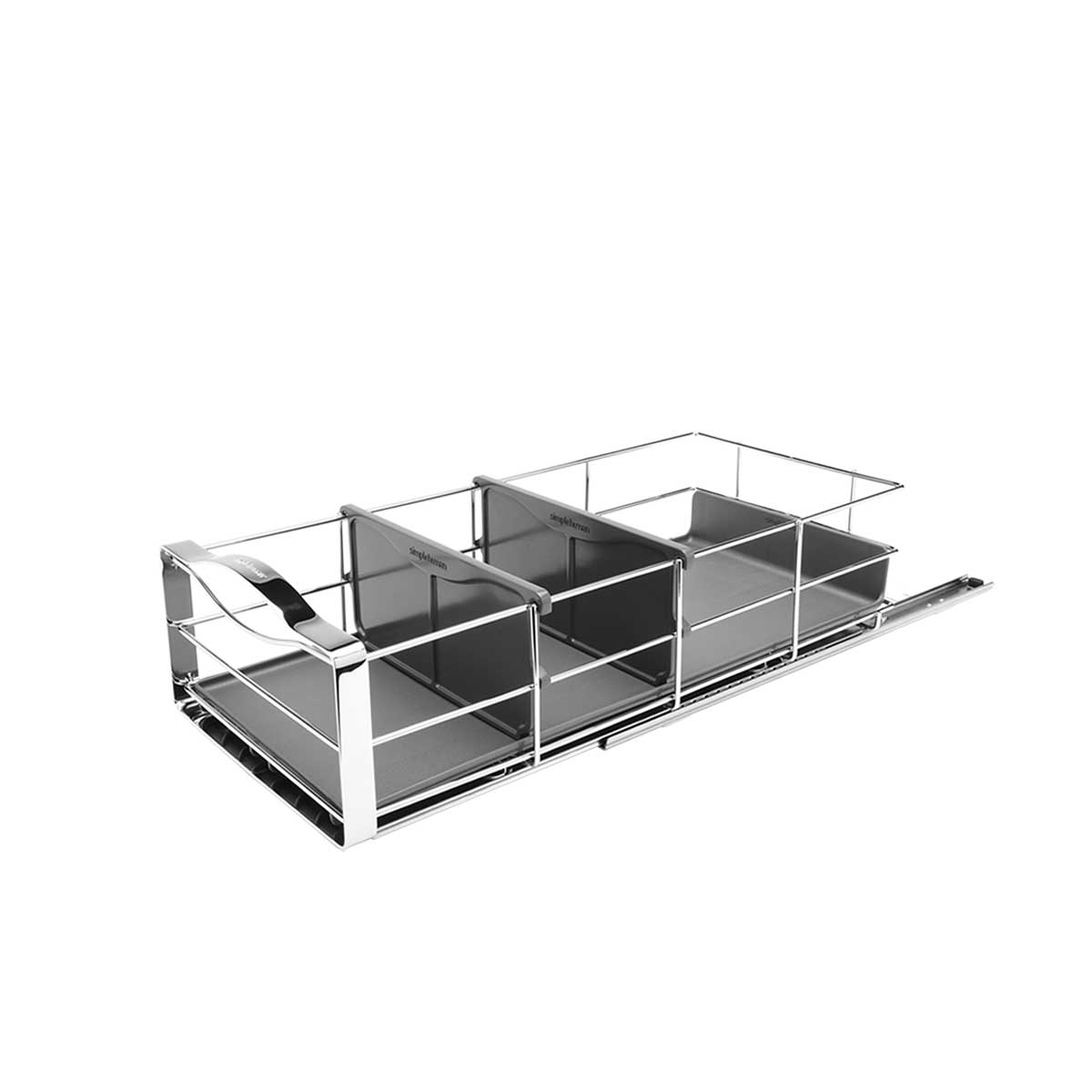
Manufacturer pages such as Simplehuman’s cabinet-organizer page provide model information and dimension diagrams. Use those details to test fit; a product name or nominal size alone is insufficient. We have not hands-on tested that organizer and do not present it as a universal under-sink recommendation.
For the rest of your apartment, explore our small-space storage guide and over-the-door organizer checklist.
Ready to compare specific products? Our four-option cabinet storage comparison covers a turntable, adjustable shelf, bakeware rack, and narrow bin. Check loaded height, plumbing clearance, and each product’s limits; these are not universal under-sink solutions.