An over-the-door organizer can add useful storage without mounting a cabinet. It can also scrape a frame, keep a door from latching, or hit the wall when the door opens. The important test is how the door works with the organizer fitted and loaded—not whether the empty hanger slips over the top.
Choose the door before choosing the organizer
Start with an ordinary interior closet or pantry door that has room to open. Avoid adding hardware to a fire-rated, self-closing, or required exit door without confirmation from the property manager that the specific installation is permitted and appropriate. An organizer must not interfere with closing, latching, or safety hardware.
Photograph the top edge, frame, hinges, and both sides before installation. Check whether the door already rubs or fails to latch. A storage accessory cannot correct an existing alignment problem, and loading a troublesome door makes it harder to identify the cause of new damage.
Measure four kinds of clearance
- Door thickness: compare the actual thickness with the exact bracket’s permitted range.
- Top gap: allow for the bracket where it passes between the door and frame; do not force a door against it.
- Loaded depth: include the bulge of filled pockets or the contents of baskets.
- Swing space: check the door handle, nearby walls, shelving, and anything behind the open door.
Also measure the organizer’s full height. A rack that hangs below a knob or around a coat hook can create a collision even when its advertised width fits. Where a product uses top and bottom attachments, compare both with your door; buying only the top-hook component may not create a complete, secure system.
Choose a type for the items you own
| Organizer type | Useful contents | Fit concern |
|---|---|---|
| Fabric pockets | Light shoes and small accessories | Filled pockets can project farther than the empty organizer |
| Rigid baskets | Appropriately sized pantry or cleaning items | Basket depth and contact with the door or frame |
| Simple hooks | Light bags, towels, or clothing within the rating | Loads can swing and rub the door |
| Modular rack | A planned mix of baskets and accessories | Complete assembly, bracket compatibility, and total load |
Do not select a rack only by its number of pockets. Count what you actually plan to store, estimate the load using product weights or a household scale, and stay within the manufacturer’s limits. Keep bottles upright where required and avoid arrangements that spill when someone moves the door normally.
Test the empty installation first
Assemble the organizer exactly as directed and fit all required stabilizers. Close the door slowly without pushing harder than usual. Check the top edge and both sides for contact, then confirm that the latch works. Open it through the range you normally need. If the bracket rubs, the door sticks, or the rack hits a wall, stop before loading it.
Adding felt can help at approved contact points, but it can also make an already tight top bracket thicker. Do not treat padding as a cure for poor fit or replace a required manufacturer fitting with a homemade substitute. The installation must remain stable and the door must work normally.
Load gradually and recheck
Place a few intended items into the organizer and repeat the closing and opening check. Then add the remaining load within the rating. Keep the door’s movement gentle and inspect again after normal use. New rubbing, a loose attachment, or a pocket dragging on the floor is a reason to unload and reassess.
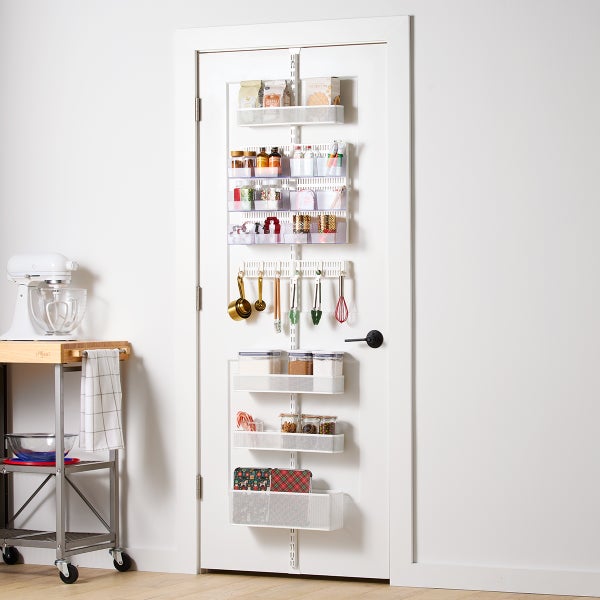
For a modular example, The Container Store’s Elfa assembly instructions distinguish over-door mounting from screw-mounted methods. Follow the instructions for the exact components sold in your region rather than assuming every rack installs the same way.
A useful alternative when the door fails the test
Choose a low freestanding cart, a shelf in an existing closet system, or a small lift-out bin instead. A renter-friendly purchase earns its place by improving storage while preserving the room’s normal function. An organizer that makes the door awkward every day is not a good trade.
See our small-apartment storage guide and under-sink measuring guide for other ways to use overlooked space.

For two specific options and their fit limits, see our comparison of over-door shoe pockets and hanging closet shelves.