NO-DRILL SECURITY
Five removable door-security options for renters: compare portable locks, full-size and folding bars, and an alarmed wedge before choosing a device for your exact door.
Editor’s note: This is a research-based comparison of manufacturer specifications and installation instructions, checked October 9, 2026. We have not hands-on tested these devices or measured their resistance to forced entry. The links below lead to manufacturer information and are not affiliate links.
The Short Version
| Use case | Pick | Important limitation |
|---|---|---|
| Smallest travel option | Addalock Original | Inward-opening hinged doors; strike-plate fit varies |
| Floor-mounted portable brace | DoorJammer Portable | Needs the correct under-door gap and a flat floor |
| Full-size apartment or patio-door bar | SABRE Adjustable Door Security Bar | Bulkier and less convenient for travel |
| Folding bar for easier storage | Master Lock 270D | Floor placement and handle fit still matter |
| Portable audible alert | SABRE HS-DSA Door Stop Alarm | Needs a battery and compatible door gap; indoor use |
None of these devices replaces a working deadbolt, a secure door frame, smoke-safe egress, or permission required by your lease. They are secondary layers used from inside the rental.
1. Addalock Original — Compact Strike-Plate Option

The Addalock is a small plate-and-handle device that fits into the existing strike opening before the door closes. Its strongest advantage is portability: it stores in a small travel pouch and requires no tools, batteries, or permanent installation.
- Good fit for: renters, dorms, hotels, and travel where pack size matters.
- Construction: the manufacturer specifies chrome-plated carbon steel.
- Watch for: it is intended for inward-opening hinged doors and depends on compatible latch and strike-plate geometry.
- Emergency use: practice removing it quickly in the dark before relying on it overnight.
Our take: Start here if you want the smallest, simplest device and you can test it on the exact door. It is not the right choice for outward-opening doors, sliding doors, or a door whose strike plate does not provide enough room.
2. DoorJammer Portable — Portable Floor Brace
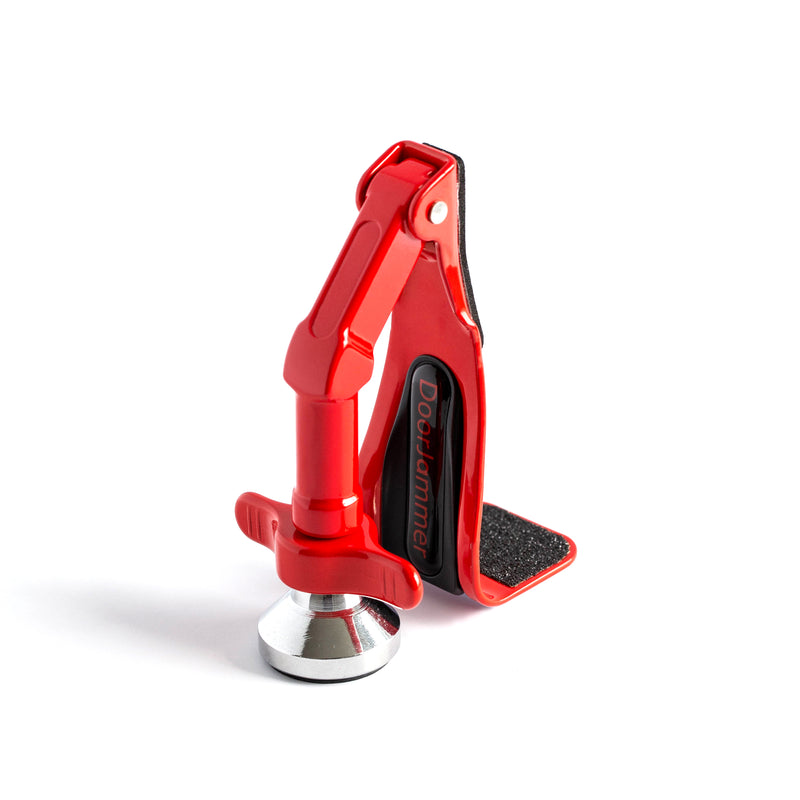
DoorJammer braces an inward-opening door against the floor rather than using the strike plate. The current manufacturer listing describes it as tool-free and compact, with a listed weight of about 0.46 pound.
- Good fit for: doors with compatible bottom clearance where a strike-plate device does not fit.
- Door direction: inward-opening only.
- Floor requirement: the foot needs a flat, stable surface.
- Clearance warning: the U.S. manufacturer FAQ currently lists a minimum gap of 1/4 inch and a maximum of about 1.3 inches for this model. Check the exact model and regional instructions before ordering.
- Watch for: raised thresholds, thick rugs, and uneven flooring can prevent proper placement. The manufacturer’s installation page says not to use these devices with weather seals or protective strips, while its FAQ is more permissive if clearance is adequate. Follow the stricter installation guidance and ask the manufacturer about your exact door before buying.
Our take: This is the most interesting travel-size option when you prefer a brace under the door instead of a plate at the latch. Door and floor compatibility matter more than the marketing photos suggest.
3. SABRE Adjustable Door Security Bar — Full-Size Door Bar

SABRE’s adjustable steel bar uses a padded fork under a hinged-door handle or, with its top door-knob cup removed, sits in the track of a compatible sliding patio door. The manufacturer lists an adjustable range of 28.5 to 45 inches for hinged doors, making it far more adaptable than a tiny travel lock—but also much bulkier.
- Good fit for: a rental where the bar will stay near the entry door instead of living in a suitcase.
- Two uses: standard hinged doors and many sliding patio doors.
- No drilling: installation relies on floor traction and correct adjustment.
- Watch for: slippery flooring, unusual handle height, weak interior trim, and poor placement can reduce effectiveness.
Our take: This is a practical full-size option for everyday apartment use when storage space is not a concern and you want one device that can also work on a patio slider.
4. Master Lock 270D — Folding Bar for Storage and Travel

The 270D folds in half, offering another approach when storing a full-size bar is inconvenient. Master Lock lists a 25.5–43.5-inch adjustment range and a weight of 2 pounds. It is a larger device than a pocket-size strike-plate lock.
- Consider it for: a compatible hinged door or patio slider when folding storage is useful.
- Fit check: the installation sheet specifies foot placement based on knob height and says not to place the bar on loose rugs or mats.
- Sliding-door setup: remove both the yoke and foot and follow the track-installation instructions.
- Evidence limit: we have not tested this model. The manufacturer’s strength comparison with its 265D is not an independent comparison with SABRE or a guarantee for your door.
Our take: Compare this with the SABRE bar if storage is your main concern. Choose by exact fit and permitted placement; the folding design does not resolve a slippery floor or incompatible handle.
5. SABRE HS-DSA — Door Stop with an Audible Alarm
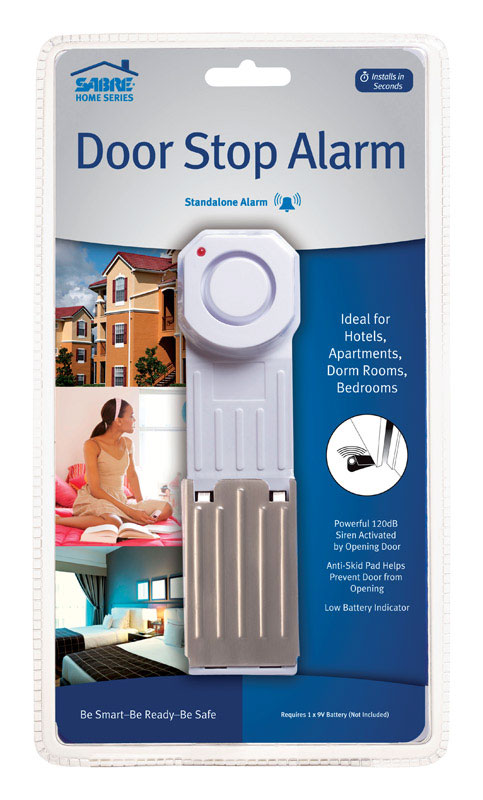
The HS-DSA manual describes an indoor wedge with a pressure-triggered alarm rated at 120 dB. It uses one 9V battery and has a low-battery indicator. This adds an audible alert to the shortlist; it is not a monitored alarm service.
- Consider it for: an inward-opening door where a portable audible alert is useful.
- Measure first: the current manual specifies a door-to-floor gap of 0.3–1.25 inches. Retailer listings can differ; follow the instructions supplied with your exact unit.
- Placement: the door must engage the metal plate, and the bottom pads need firm floor contact.
- Trade-offs: maintain the battery, use only indoors in dry conditions, and follow the hearing warnings when testing.
Our take: An option for adding noise, with door fit and floor grip still essential. We have not measured its alarm output or forced-entry resistance.
How to Choose the Right Type
- Confirm the door opens inward. Addalock and DoorJammer will not secure an outward-opening door.
- Inspect the threshold and floor. Floor braces need solid contact; thick carpet, mats, and raised weather seals can interfere.
- Measure before buying. Check the gap under the door, handle height, and available floor distance.
- Test emergency removal. Everyone in the home should be able to disengage the device quickly without tools.
- Check the lease and building rules. A removable device is usually less intrusive, but it must not violate fire-egress or property policies.
What Outside Testing and Owner Reports Tell Us
DoorJammer: exterior-door clearance is a real purchase check. In Mark Wolfe’s hands-on comparison for Bob Vila, the tester could not fit the DoorJammer under either exterior door because of the weather stripping and door sweep. It held on the bedroom and bathroom doors used in that test. That supports checking your exact threshold before buying; it does not establish performance on every rental door or a certified forced-entry rating. The article’s accessories may differ from the current package, so verify the exact model and contents with the manufacturer.
SABRE: an owner report flags floor grip. A February 17, 2026 owner review displayed on Lowe’s HS-DSB review page reports that the foot slid on their linoleum floor and that the available length did not suit their intended placement. This is one person’s experience, not a measured failure rate. The same review also appears on other retailers through SABRE, so it should not be counted as several separate complaints. Confirm the exact model, adjustment range, and permitted placement before ordering.
How we use reviews: Manufacturer instructions establish intended use and fit requirements. Identifiable hands-on tests add observations about the setup tested. Owner reviews help identify questions to investigate, but feelings of security, delivery complaints, and star averages do not prove resistance to forced entry. We distinguish different model versions and disclosed promotional reviews, and we label these findings as outside evidence rather than our own testing. Sources checked October 9, 2026.
What We Would Test Before Final Rankings
Before converting this research shortlist into a final hands-on ranking, we would test installation time, compatibility across common apartment doors, release speed during an emergency, floor grip, door and trim marking, repeatability, and how easily each device can be defeated by incorrect placement.
Safety note: A secondary security device can slow unwanted entry, but no portable product guarantees protection. Do not use one in a way that blocks required emergency egress or prevents other occupants from leaving safely.
Sources and Installation Instructions
Our recommendation standard: quality, value and renter fit come first, including options that earn us no commission. This comparison is based on research, not our own hands-on testing. How we review products.